


Brain Fitness Information

Brain Fitness: A Path to Cognitive Health and Wellness

Goal:  Education, movement and fun activities designed to improve fitness PLUS preserve and enhance memory and brain health.

Each class will include 30 minutes of Dual Task Training.

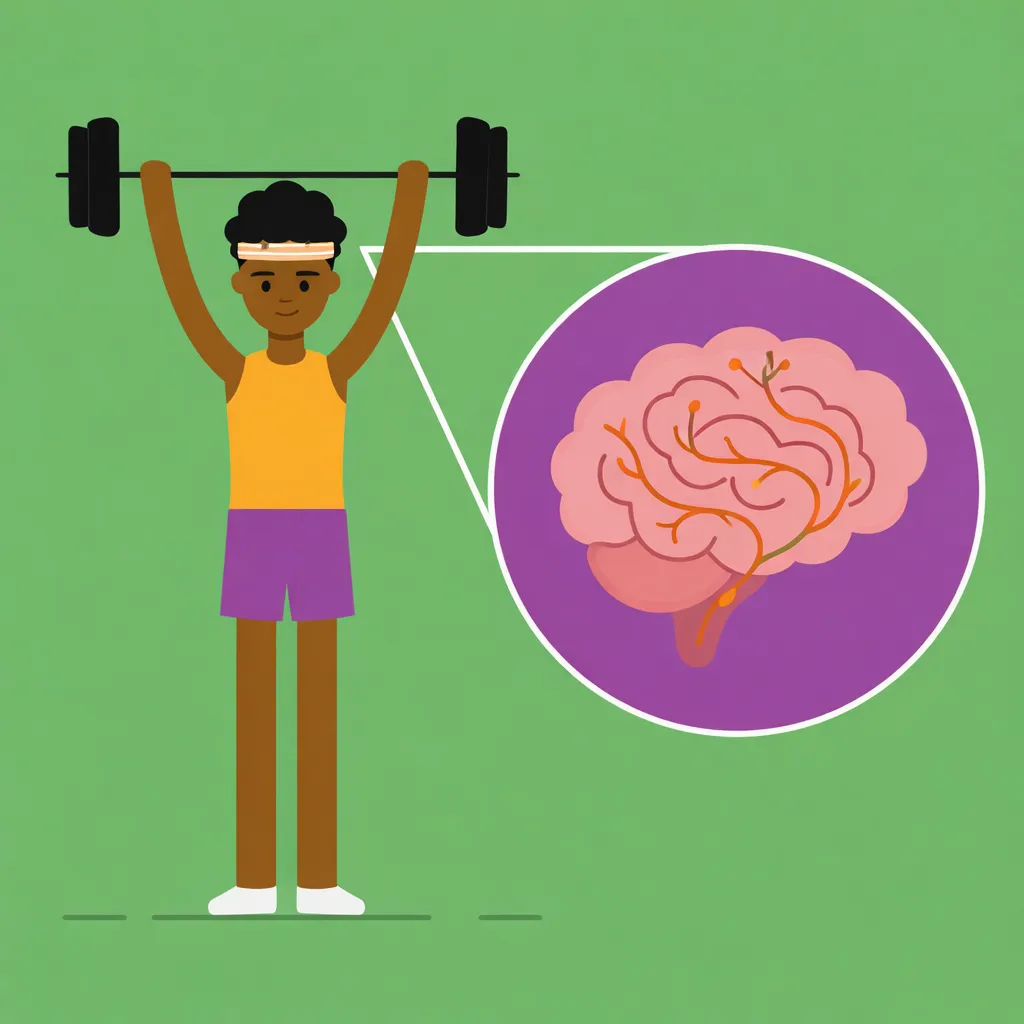
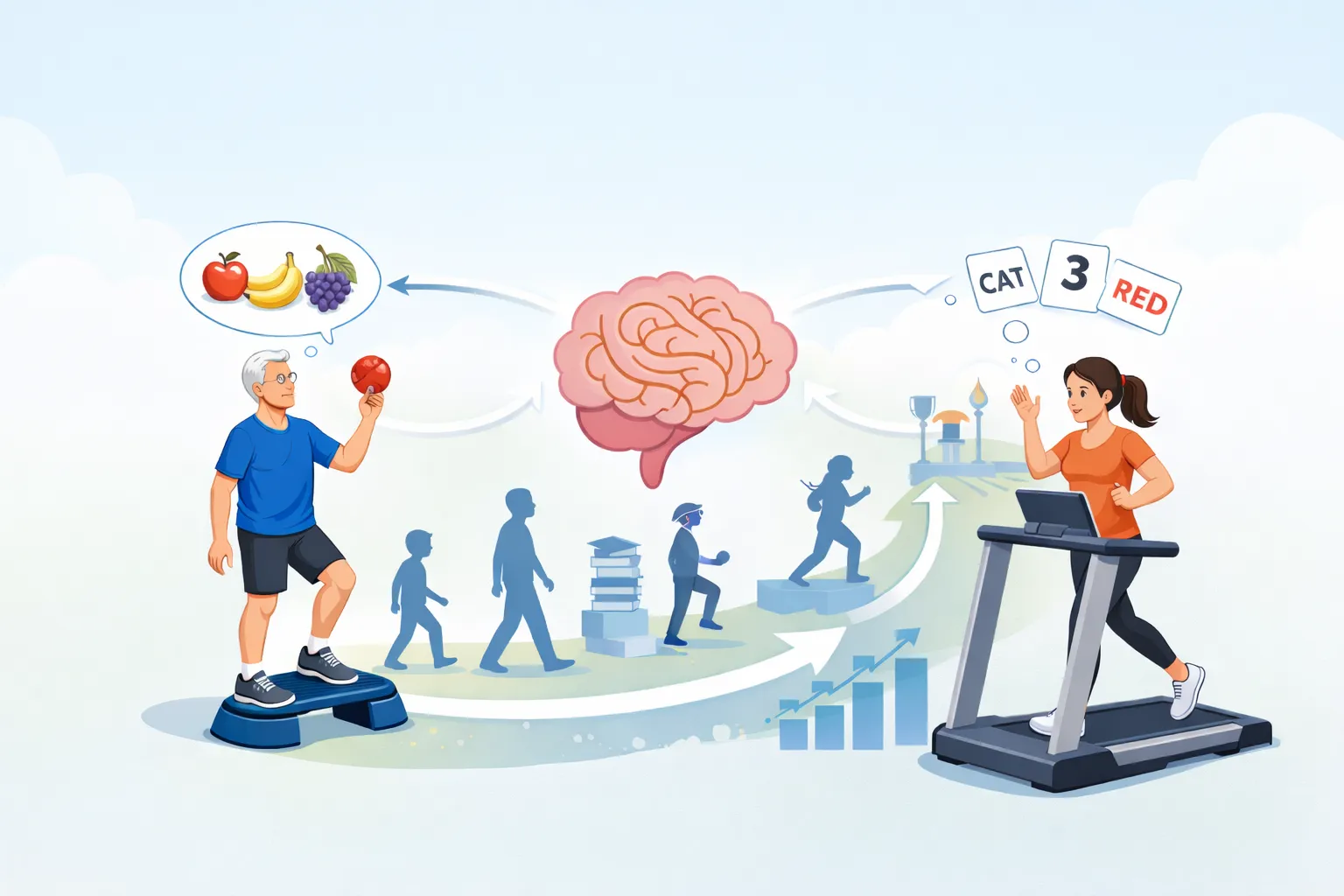
Dual task training involves simultaneously performing cognitive and motor tasks (physical movements).  Engaging in dual tasks enhances attention and cognitive resilience and performance. It can stimulate neuroplasticity, which is the brain’s ability to form new neural connections and reorganize.  This can lead to improvements in memory and executive function. 

Risk Factors for Cognitive Decline

As we age, it’s normal to experience some degree of forgetfulness, but when memory changes start to affect daily life, it could be a sign of something more serious. This section explains the difference between age-related forgetfulness and signs of dementia. Learn more about common age-related memory lapses and when they may indicate the need for further evaluation.

Age-Related Forgetfulness

Signs of Dementia

Memory and Aging: Protecting Your Brain Health

As we age, our brain undergoes changes that can affect memory and cognitive function. This section highlights the key risk factors for cognitive decline and emphasizes the importance of maintaining brain health through lifestyle choices. Discover the differences between short-term and long-term memory, and learn about preventive measures that can help reduce the risk of Alzheimer’s and related dementias.

Risk Factors for Cognitive Decline

Did you know that there are known risks for Alzheimer’s disease and related dementias?
There are various physical and lifestyle-related factors that can contribute to cognitive decline. By understanding these risks, we can take proactive steps to maintain cognitive health.

Key Risk Factors Include:
  • Physical Inactivity
  • Smoking
  • Diabetes
  • High blood pressure
  • Hearing loss

Source: CDC (Centers for Disease Control and Prevention)

Neuroplasticity and Brain Function

What is Neuroplasticity?

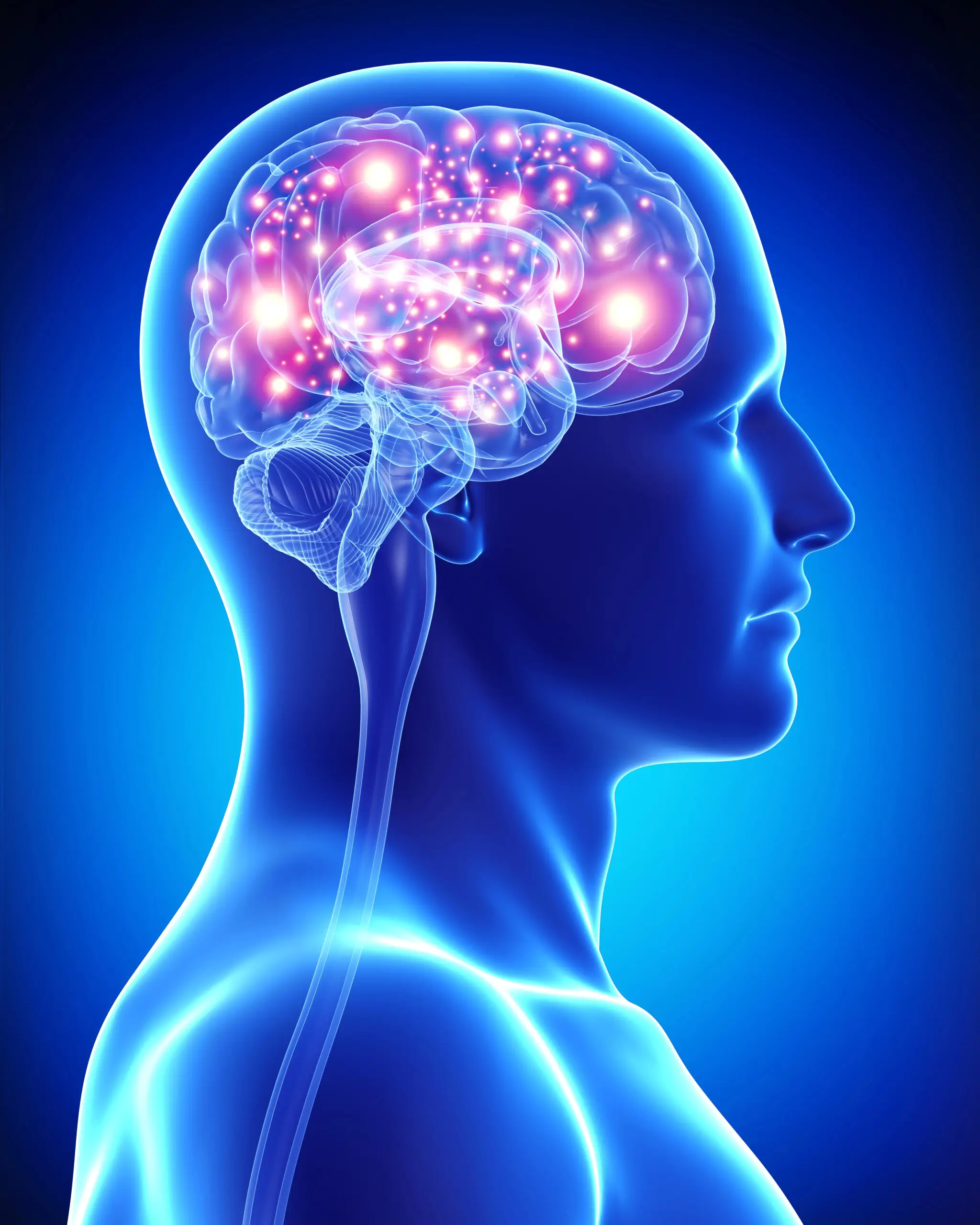
Neuroplasticity is the brain’s ability to change and adapt by forming new neural connections. Think of it as an internal rewiring process that allows your brain to grow and meet new and increased demands. This process is essential for improving cognitive function, particularly in tasks related to learning, thinking, and memory.

What Does Neuroplasticity Do to Our Brains?

  • Formation of New Skills and Memories: Neuroplasticity is responsible for how we learn new skills, form memories, and adapt to new situations.
  • Building Stronger Connections: It involves strengthening the connections between neurons (synapses), enhancing brain function.
  • A Lifelong Process: Neuroplasticity is continuous throughout our lives. Regular exercise is significantly linked to improved neuroplasticity and cognitive performance.

Dual Tasking Activities

Dual Tasking: The Key to Cognitive Resilience

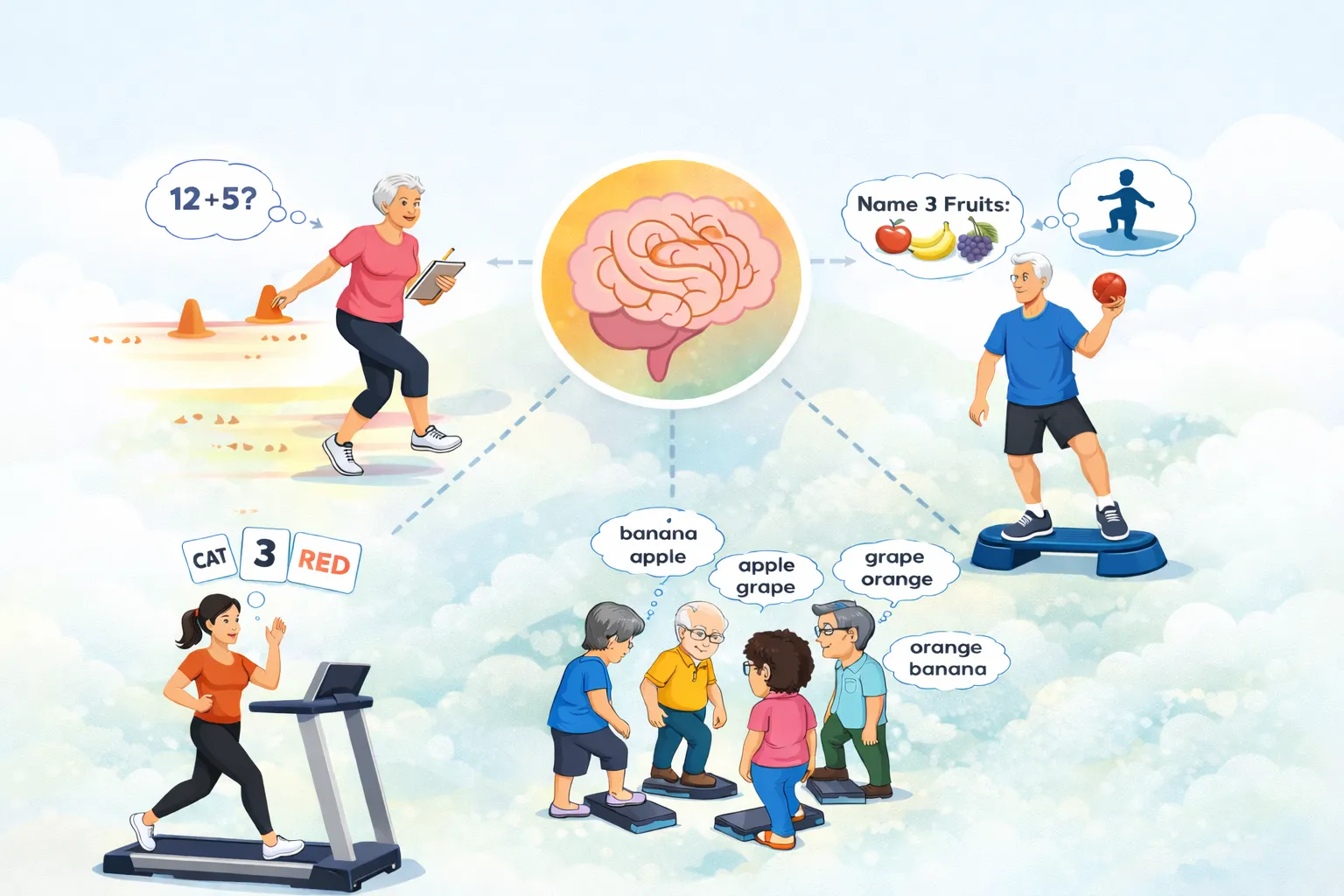
Dual tasking involves performing a cognitive task (such as solving a puzzle or counting) while simultaneously engaging in a physical activity (such as walking or balancing). This combined approach enhances the brain’s ability to process information from multiple sources at once, improving both attention and cognitive performance. Engaging in dual tasks stimulates neuroplasticity—the brain’s ability to reorganize itself by forming new neural connections, improving memory, attention, and executive function.

Why Dual Tasking Works A Lifelong Approach to Cognitive Health

The brain’s ability to learn, adapt, and form new memories is a lifelong process. Dual tasking challenges both the brain and body, improving cognition better than exercise alone. Research shows that dual-task activities yield lasting cognitive benefits, especially when performed consistently. These activities stimulate neuroplasticity, leading to improvements in memory, focus, and mental clarity.

Some Dual Task Activities

Q What is Brain Fitness?

Brain Fitness classes are fun, science-based activities designed to keep your mind active.
 They include memory games, problem-solving tasks, puzzles, and group challenges that help improve mental sharpness.

Who can join these classes?

Brain Fitness classes are fun, science-based activities designed to keep your mind active.
 They include memory games, problem-solving tasks, puzzles, and group challenges that help improve mental sharpness.

Do I need any previous experience?

Brain Fitness classes are fun, science-based activities designed to keep your mind active.
 They include memory games, problem-solving tasks, puzzles, and group challenges that help improve mental sharpness.
Are the classes physically demanding?

Brain Fitness classes are fun, science-based activities designed to keep your mind active.
 They include memory games, problem-solving tasks, puzzles, and group challenges that help improve mental sharpness.

How long is each class?

Brain Fitness classes are fun, science-based activities designed to keep your mind active.
 They include memory games, problem-solving tasks, puzzles, and group challenges that help improve mental sharpness.

A Sample Brain Fitness Class: Where Movement Meets Cognitive Challenge

Each Brain Fitness class consists of a 55-minute session focused on both physical movement and cognitive challenges. The class structure includes:

  • Balance and Agility Exercises (10 minutes): Obstacle courses designed to improve coordination and stability.

  • Strength Training (15 minutes): Single arm/leg exercises to build strength and endurance.

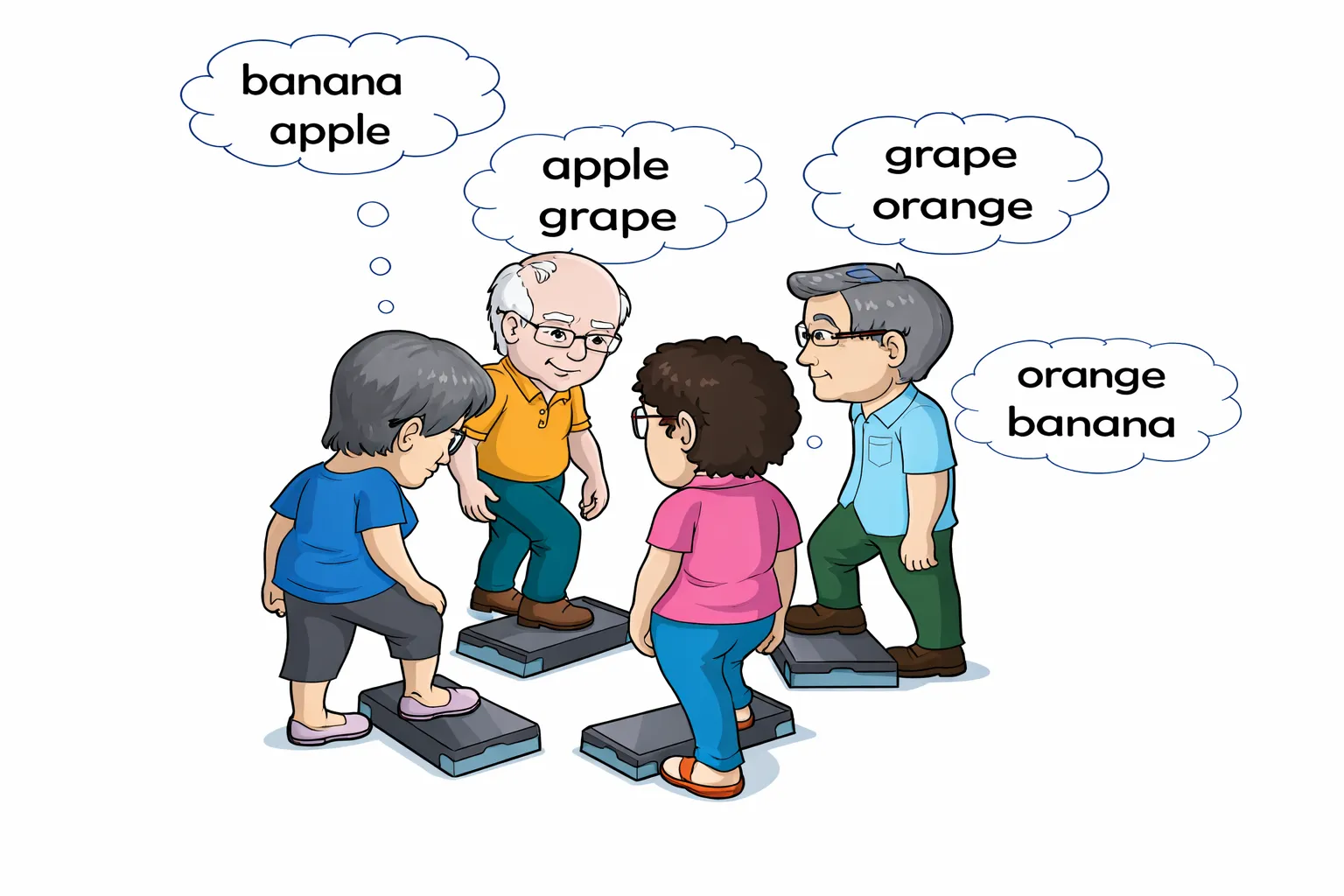
  • Dual Tasking Activities (30 minutes): Engage in cognitive tasks (e.g., word recall, math problems) while performing physical movements (e.g., walking, lunges).

These activities are designed to challenge both the body and mind, fostering neuroplasticity and improving brain health.

A Sample Brain Fitness Class Will Include

Dual Tasking training involves performing a cognitive task (such as counting or solving a puzzle) while simultaneously engaging in a physical task (such as walking and balancing).

Examples of Dual Tasking Activities

The Cognitive Benefits of Dual Tasking

Dual tasking has been shown to offer the following cognitive benefits:

  • Memory Improvement: Enhances both short-term and long-term memory by combining physical activity with cognitive tasks.

  • Enhanced Attention: Improves the ability to focus and multitask, even in challenging environments.

  • Executive Function: Supports the brain’s ability to manage tasks, make decisions, and solve problems effectively.

Join Our Brain Fitness Classes

Our Brain Fitness classes are designed to help you improve cognitive health, maintain mobility, and enhance memory. The classes are open to all members of the active aging population. Each session combines physical activity with cognitive challenges in a fun and supportive environment. Pre-registration is required, and assessments are conducted before and after the program to track your progress.

Jan Hertzfeld, MPH,  ACSM certified fitness instructor  and Brain Fitness Coach

Scroll to Top